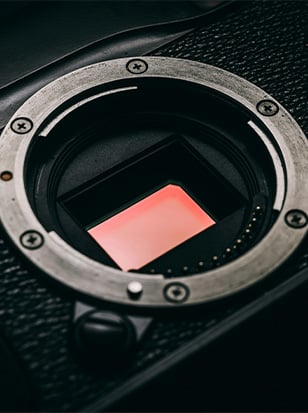
The best compact cameras will offer a significant advantage in image quality compared to a smartphone. With a physically bigger imaging sensor (in some cases much bigger) a good compact is able to produce superior imagery, with heaps of dynamic range and detail. Some will also offer a powerful optical zoom lens, or a super-sharp prime.
For the purposes of this guide, a compact camera is defined as a camera with a fixed lens, in contrast to mirrorless and DSLR cameras, which allow for lenses to be swapped out at will via the lens mount. While compacts used to be thought of as the cheap and cheerful end of the camera scale, these days with the demand for cheap cameras significantly reduced, the more popular compacts tend to be premium models.
What's coming up:
Best overall compact camera: Fujifilm X100VI
Best compact camera for street photography: Ricoh GR IV
Best compact camera for beginners: Panasonic LUMIX FZ82D
Best full-frame compact camera: Leica Q3
Best premium compact camera: Sony RX1R III
Best affordable compact camera: Kodak PixPro C1
Best compact camera for image quality: Fujfilm GFX100RF
Best compact camera with a zoom: Nikon Coolpix P1100
Best pocket-sized compact camera: Panasonic Lumix TZ99
Best compact camera for YouTube: Sony ZV-1 II
If you think you’d prefer being able to switch out lenses in an interchangeable system, we also have guides to the best mirrorless cameras For more options overall, check out our general guide to the best cameras, which includes all different types. Otherwise, read on as we count off the best compact cameras for a range of use cases and budgets.
Best Overall Compact Camera
|
Pros:
Cons:
|
Sensor: 26.1MP APS-C X-Trans CMOS 5 Lens: Fixed 23mm f2 (equiv.) Autofocus: Phase detection with AI-based tracking Video: 4K/60fps Screen: 3-inch tilting touchscreen |
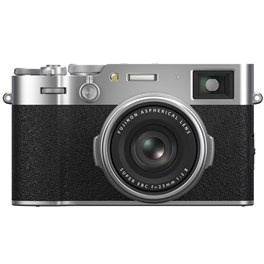
The sixth iteration in one of the most popular camera lines of all time, the Fujifilm X100VI is not a camera that messes with what has already been working. From the introduction of the very first X100 camera, all the way back in 2010, the magic formula has been a combination of an APS-C sensor with a 23mm lens (35mm equivalent). None of the subsequent models have messed with this, instead iterating on what’s gone before, incrementally building up what is perhaps the finest street photography camera ever made.
Equipped with a 40MP sensor and a dazzlingly sharp prime lens, the X100VI produces sumptuous images. Thanks to Fuji’s impressive Film Simulation modes, you can give your images specific vintage “looks”, and the manufacturer’s colour science is, as ever, some of the best in the business. This newer model also adds in built-in ND filters, allowing you to control for particularly bright lighting conditions, and its lightning-fast autofocus features AI-powered Subject Detection, enabling it to lock onto human subjects. The only downside with the X100VI? It’s so popular you might have a difficult time getting hold of one!
Best Compact Camera for Street Photography

|
Pros:
Cons:
|
Sensor: 25.74MP APS-C CMOS Lens: Fixed 18.3mm f2.8 (28mm equiv.) - 7 elements in 5 groups (3 aspherical) Autofocus: Hybrid AF (phase and contrast detection) Video: Full HD at 60p, 30p, and 24p Screen: 3.0-inch TFT LCD (1037K dots) |
The long-awaited Ricoh GR IV takes everything photographers love about the GR series and pushes it further - Easily taking the place of the GR III as the best compact camera for street photography. This version uses a next-generation imaging engine that works hand in hand with a new 25.74MP APS-C sensor, delivering faster processing and improved image quality. You've also got a redesigned 18.3mm f2.8 lens, now featuring 7 elements in 5 groups (including 3 aspherical elements) that promise sharper results and reduced distortion.
Low light performance has had a significant boost, too, now reaching a max. ISO 204800. This is reinforced by 5-axis in-body image stabilisation, which together, will keep your shots steady in lower light situations. We also see GR IV’s hybrid autofocus system combining phase detection and contrast detection, resulting in quick, accurate focusing, which is vital when shooting street photography.
It has the same AA filter simulator that'll reduce false colours and Moiré, and you'll be able to check that on the high-resolution 3.0-inch TFT LCD. Everyone likes a bit of video, and the GR IV gives you Full HD recording at 60p, 30p, and 24p.
So, the GR IV really is a fantastic evolution of the GR series. Once again, it's about incremental improvements and refinements rather than dramatic updates. It's still a pocketable powerhouse that's fast, discreet, and will most likely continue to grow Ricoh's street photography following.
Best Compact Camera for Beginners

|
Pros:
Cons:
|
Sensor: 18.1MP MOS Lens: 20-1200mm f/2.8-5.9 (equiv.) Autofocus: DFD (Depth From Defocus) technology Video: 4K/30fps Zoom: 60x optical zoom |
A new bridge camera for 2024, the Panasonic Lumix FZ82D is brilliant for beginner photographers and videographers alike. Designed to do a bit of everything, it’s equipped with a powerful 60x zoom lens and features effective optical stabilisation to keep shots sharp even when working at extreme zoom levels. As a more modern camera than many others of its type, it benefits from up-to-date features like USB-C charging.
Capable of capturing 4K video at 30p, the Lumix FZ82D also benefits from Panasonic’s 4K Photo modes, which allow you to extract high-quality stills from 4K footage, effectively giving you a 30fps burst mode. Drop the video resolution down, and you can capture at high speeds of 100p and 120p, which is perfect for creating super-slow-motion footage. Compact and lightweight, the Lumix FZ82D is an ideal choice for anyone dipping their toes into the world of photography and video.
Best Full-Frame Compact Camera
|
Pros:
Cons:
|
Sensor: 60MP Full-frame CMOS Lens: Fixed 28mm f1.7 Autofocus: Phase-detection AF with contrast-detection Video: 4K/60fps Screen: 3-inch tilting touchscreen LCD |
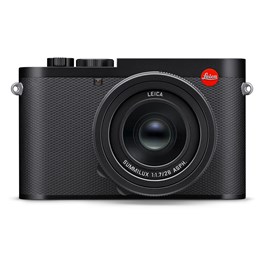
The latest and greatest in Leica’s line of full-frame fixed-lens compacts, the Lecia Q3 is possibly the greatest street photography camera ever made. It pairs a pin-sharp and optically stabilised Leica Summilux 28mm f1.7 ASPH lens with a full-frame sensor – but what’s really clever is the triple-resolution design. This allows you to shoot at 60MP, 36MP or 18MP, depending on whether you need to prioritise detail or card space.
The low-light performance of the Leica Q3 is absolutely unreal – you can push the ISO up to 100,000 and still get useable shots if you’re willing to work them a little in post-processing. The machining of the body and the handling of the camera is, of course, sublime – we’d expect no less. The Hybrid autofocus system, meanwhile, is super-fast and incredibly accurate, making use of phase-detection for added precision. And as if that weren’t enough, the Q3 can also handle 8K 30p video.
Best Premium Compact Camera

|
Pros:
Cons:
|
Sensor: 61MP full-frame Exmor R BSI CMOS Lens: Zeiss 35mm F2 Sonnar T* Autofocus: 693-point phase detection with Real-Time Tracking and Eye AF Video: 10-bit 4K30p, 6.2K oversampled, and FHD 120p Screen: Fixed 3.0-inch 2.36m-dot touchscreen |
A welcome surprise release in 2025, the RX1R III saw Sony re-entering the premium compact space with a bang. A full-frame sensor with 61MP of resolution meets a deliciously sharp 35mm F2 Sonnar T* lens made by Zeiss, and is housed in an absolutely tiny body that can be easily slipped into a pocket or small bag and taken everywhere. Somehow, this thing weighs just 498g!
Equipped with Sony’s 693-point phase detection autofocus, which benefits from AI-powered subject-detection, the RX1R III is a camera capable of handling a multitude of different shooting situations. With the flick of a macro switch, it can focus at distances as close as 14cm, and its back-illuminated sensor allows it to deliver up to 15 stops of dynamic range, producing imagery with rich colour.
We predicted it might just become a new cult classic, and that means while it’s not a camera that’s necessarily going to appeal to everyone, it also might be exactly what you’re looking for.
Best Affordable Compact Camera

|
Pros:
Cons:
|
Sensor: 13MP 1/3" BSI CMOS Lens: 26mm F2 (equivalent) Autofocus: Yes Video: Full HD 1080p 30p Screen: 2.8-inch 180° upward tilting LCD |
If you’re on an ultra-tight budget for a compact camera, the Kodak PixPro C1 should be your port of call. For an incredibly affordable £79, this stylish little compact shoots bright and colourful imagery, with 13MP stills and 1080p video available. It’s not a terribly sophisticated model, but it doesn’t need to be; you point, you shoot. Anyone can use it, even young kids, making the PixPro C1 a potential good choice for family holidays.
You do have a few interesting ways to exercise your creativity. We’re particular fans of the Creative Looks, and in particular the aptly named ‘Retro’ filter, which gives your images a pleasingly analogue-feeling warmth.
The Full HD video means that the PixPro C1 can potentially function as a rudimentary vlogging camera, though the lack of stabilisation and other modern comforts like Face-detection autofocus will make it a little trickier.
Best Compact Camera for Image Quality

|
Pros:
Cons:
|
Sensor: 102MP medium format CMOS II sensor Lens: 35mm F4 (28mm equivalent) Autofocus: 121/425-point hybrid system with Subject Detection Video: 4K 30p Screen: 3.15-inch tilting touchscreen LCD |
There are plenty of great premium compact cameras on the market, as we’ve already seen on this list. However, if you’re looking for the absolute best you can get in terms of image quality from a fixed-lens camera, then we simply have to give it to the Fujifilm GFX100RF. Essentially, it’s a cross between the medium-format mirrorless GFX series and the phenomenally popular X100VI, taking the class-leading quality of the 102MP GFX sensor and putting it in a relatively small body with tactile controls and a fixed 28m equivalent lens.
The level of quality you get in shots from this camera is absolutely breathtaking, with stunning levels of detail and dynamic range. You can also make use of Fuji’s Film Simulation modes to give your image specific analogue-style looks.
Once it would have been crazy to think that a medium format camera could be used for street photography, but the GFX100RF is capable of keeping up with the action thanks to its sophisticated and fast autofocus system that benefits from intelligent subject-detection.
Best Compact Camera With a Zoom

|
Pros:
Cons:
|
Sensor: 16MP 1/2.3-inch BSI CMOS Lens: Fixed 4.3-539mm f2.8-8 (24-3000mm equivalent) Autofocus: Contrast-detect AF Video: 4K UHD at 30fps Screen: 3.2-inch fully articulated LCD with 921k-dot resolution |
The latest in NIkon’s Coolpix line of mega-zoom cameras, the Nikon Coolpix P1100 may look like a DSLR at first glance, but it’s a fixed-lens compact bridge camera. This line has perhaps become most famous for its zoom lenses being so long they allow the user to take clear pictures of the moon, or ‘moonscapes’. The Coolpix P1100 certainly achieves that, with a 24-3000mm optical focal range that can be digitally doubled to a 6000mm equivalent, with minimal loss of quality. That’s impressive stuff, and the camera is well-equipped for other long-zom pursuits too. For instance, it’s a dab hand for wildlife and particularly birds, thanks to its clever ‘Bird Watching’ autofocus mode, with selectable areas for precise pin-point accuracy.
This is quite a specialised camera — if you don’t need that long zoom, you’ll get better elsewhere. However, for those who crave telephoto goodness, this is one of the most cost-effective ways to get it: a substantially cheaper proposition than a mirrorless or DSLR camera with an equivalent lens.
Best Pocket-Sized Compact Camera

|
Pros:
Cons:
|
Sensor: 20.3MP 1/2.3-inch High Sensitivity MOS Lens: Fixed 4.3-129mm f3.3-6.4 (24-720mm equivalent) LEICA DC Vario-Elmar Autofocus: Hybrid contrast-detect AF with 49-area focusing Video: 4K UHD at 30p; Full HD at 60p Screen: 3-inch tilting touchscreen LCD with 1,840k-dot resolution |
Want a capable compact camera for travel? Look no further — the Panasonic Lumix TZ99 is an ideal pocket-sized compact for taking on the go. It may be small, but it’s got imaging power to spare, equipped as it is with a 24–720mm equivalent Leica-made lens that delivers superb image quality. Also, the camera body is equipped with a hybrid optical stabilisation system, making the telephoto end of that lens much easier to use handheld without a tripod. What this means in real terms is sharper shots at every distance.
One extra-useful feature for travel is the inclusion of a USB-C charging port. This means that if you’re out and about and the battery warning starts to flash, you can simply juice up with a battery pack and keep on shooting. As well as excellent stills, the Lumix TZ99 is also capable of capturing 4K video at up to 30p, or FUll HD at up to 120p if you want to get creative with slow-motion.
Best Compact Cameras for YouTube
|
Pros:
Cons:
|
Sensor: 1-inch Exmor RS CMOS, 20.1MP Lens: 18-50mm f/1.8-4 (equiv.) Autofocus: Fast Hybrid AF with Eye AF and Tracking Video: 4K/30fps, Full HD/120fps Stabilisation: Active SteadyShot |
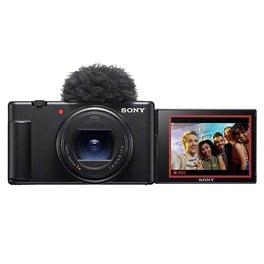
Sony’s refinement of its vlogger-friendly compact camera is an excellent option for YouTubers. With a wide-angle zoom that opens up to 18mm equivalent, you can fit plenty in the frame, and capture all the action in 4K 30p quality. This slimline camera sports a fully articulating LCD screen as well as a built-in three-capsule microphone that ensures audio quality is a cut above the average. There’s also the option to plug in an external mic if you prefer — though be aware that the camera is lacking a headphone jack.
Benefiting from phase-detection autofocus, the Sony ZV-1 II is a highly flexible shooter that can easily adapt to different situations. It also boasts Sony’s face-recognition technology, meaning it can recognise when new people enter the frame and make relevant adjustments to focus and bokeh.
Sony’s ZV cameras are designed for vlogging first and foremost — while they of course do capture stills, it’s not really what they’re intended for, as evidenced by the lack of a viewfinder.





FAQs
What is a compact camera?
A compact camera is a small, portable digital camera designed for easy use, with a built-in lens and limited manual controls. It’s ideal for everyday photography, offering convenience without the bulk of larger camera systems.
How does a compact camera differ from a DSLR?
Compact cameras are smaller and lighter than DSLRs, with fixed lenses and automatic settings. They typically lack the advanced features and interchangeable lenses found in DSLRs but are easier to use for casual photography.
Are compact cameras good for low-light photography?
Compact cameras perform well in good lighting but may struggle in low-light conditions due to smaller sensors. Some high-end models feature larger sensors and better image processing, improving low-light performance.
Can I zoom with a compact camera?
Yes, many compact cameras come with optical zoom lenses, allowing you to zoom in on subjects without losing image quality. Some models even offer a decent zoom range, making them versatile for various types of photography.
How long does the battery last in a compact camera?
The battery life of a compact camera typically ranges from 200 to 400 shots per charge, depending on usage and model. It’s important to carry an extra battery for extended shooting sessions, especially when using the camera for video recording.
How do we decide?
Our in-house photography specialists, store staff, and industry partners work together to review our buying guides and advice articles. We also monitor emerging trends and listen closely to customer feedback, ensuring our recommendations stay current and relevant to what photographers and filmmakers are actually looking for.
By carefully curating the products we recommend, our guides are designed to offer clear, trustworthy advice that helps customers choose the right kit with confidence.
If you would like further advice, our contact centre team are here to help. You can also reach us via email or social media. And remember, if you purchase based on our recommendations, your order is covered by our full returns policy.
The Wex Blog




Sign up for our newsletter today!
- Subscribe for exclusive discounts and special offers
- Receive our monthly content roundups
- Get the latest news and know-how from our experts