
If you’re looking to photograph the night sky, we’ve compiled a list of the best accessories for astrophotography. We’re assuming you’ve already got your camera, and maybe even a telescope, but there are plenty of other useful tools that can help you improve your astro hit rate and get the shots you’re looking for.
It may not be the case that you need absolutely everything on this list, as there are many different types of astrophotographer. However, what we’re aiming to do here is get you thinking creatively and planning your shoots in advance, as these two things really are the key to success when it comes to astrophotography. If you just wander outside at night with a camera, you’re not going to have much luck. But if you plan well, and have the right kit, you can come away with stunning and unique images.
Binoculars
A big part of your astrophotography will be spent scouting, whether that's viewing locations or scouting the sky for the correct positioning before you set up your camera. To that end, a pair of binoculars makes for a great addition to your kit bag.
We'd recommend the Celestron SkyMaster 15x70 Binoculars, which offer 15x magnification and a large 70mm objective lens for maximum brightness even in dark conditions. Protective rubber covering makes the binoculars easy to grip, and a long eye relief means they're even easy to use if you wear glasses.
Alternatively, there’s the Pentax Jupiter 16x50 Binoculars. Even cheaper than the Celestron pair, the Pentax Jupiter 16x50 Binoculars are the perfect starter pair for the amateur stargazer. They deliver 16x magnification and sport a 50mm objective lens, which is smaller than the 70mm on the Celestron, but still good at light gathering. They also have a rubber armouring to protect against bumps and knocks.


Filters
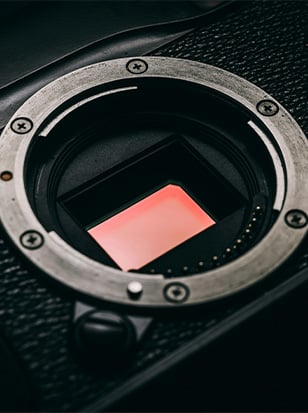
Not all of us are lucky enough to live in an area free from light pollution, and you'll find that there are many sources of unwelcome light that can make Astro shooting a challenge. That's why it's worth picking up an STC Clip filter; these are placed between your camera's sensor and lens and are designed to filter out specific bands of light, resulting in clean and sharp astro images.
Here are just a couple of examples, one built for Sony cameras and the other, for Canon, but there are other options. You can find filters for various camera brands here. And, if you can’t find one that’s suitable for your camera, be sure to contact us and we can look into ordering a specific filter for your camera.


Triggers
Another vital accessory when shooting long exposures – even the minuscule movement of depressing the shutter button can cause blur and ruin a great shot. A release to trigger your camera remotely is the perfect solution. Even if your camera is Wi-Fi enabled and you can use your smartphone to trigger it, a reliable remote release is an inexpensive and worthwhile backup.
You'll need to pick the right release for your specific brand of camera, so it's worth looking at the full list of remote releases to make sure you get something compatible with your camera. Here are a couple of tried and tested triggers that are the go-to options for Sony and Canon.


Rain Covers
Since you’re going to be out for a while, it’s good to have some protection if the heavens open. A rain cover will also be useful for keeping your gear safe from the dew and moisture that comes from spending a lot of time outdoors at night. We have lots of options to look at to suit most camera/lens combinations; you can view those here. But we’d encourage you to check out these two options.
The Think Tank Emergency Rain Cover range is available for a variety of different camera and lens combinations and is a simple, compact solution to protect your gear from a downpour or dusty conditions. The polyurethane build is durable and will keep your gear safe. The other option comes from LensCoat; a highly regarded brand within the industry for producing a wide range of lens wraps, rain covers and other accessories.


Torches
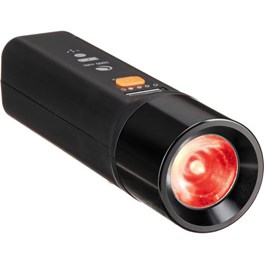
If you’re going to be out at night, in the kinds of poorly lit areas that are absolutely perfect for astrophotography, a torch is an absolute must. No ifs, no buts — if you don’t have a torch with you on a night excursion, you could seriously hurt yourself on uneven ground, and it can be dangerous to rely on your phone and its temperamental battery.
Your best bet is the Celestron PowerTank Glow 5000, a torch that is specifically designed for astrophotographers. It uses a red glow rather than white, which is non-glaring and won’t compromise your night vision, meaning you won’t be blinded every time you turn it on. It also uses its own rechargeable battery, which you can juice up via USB.
Another good option is the more affordable Sky-Watcher Dual LED Flashlight, which can toggle between white and red lights depending on the situation, and offers adjustable brightness levels. This torch doesn’t have its own rechargeable batteries, but comes with some in the box.
Stools
This might not occur to you when planning your shoots, but you’re likely going to be waiting around for some time while your camera does its thing, and something to sit on that isn’t the bum-dampening grass will be very welcome. A light foldable chair or stool won’t add much to your kit’s weight and will give your poor knees a rest.
We'd recommend the Walkstool Comfort 55 XL, a portable stool with telescopic legs that folds away and comes with its own bag for easy transportation to your location. Sure, you could get a camping chair or something else, but again, if you’re trying to limit the weight of your camera bag if you’re photographing the stars in the middle of nowhere, a packable stool like this is a solid choice.

Batteries
Nights tend to be cold, and this will adversely affect your camera’s batteries, meaning they won’t last as long. This means you should absolutely be carrying spares so that you don’t end up cutting your night short for this most trivial of reasons. You can go for native batteries or you can go third-party (there are some solid options out there now); either way, in this scenario, more is better. It’ll also be a good idea to pack some spare AA batteries for your torches and headlamps, and a power bank for your smartphone or other small electronics.
Browse our full selection of batteries here
How to choose a camera for astrophotography
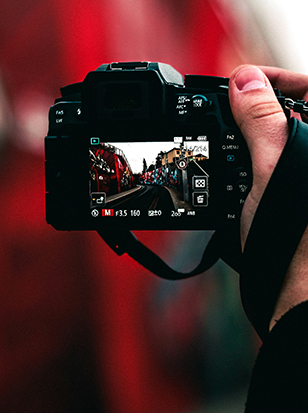
While any camera can potentially be used for night sky and astrophotography, it's best to use a high-sensitivity model that can make as much use of the available light as possible. You want something with a large sensor (to produce less noise in low light) and a high ISO ceiling. We have a guide for astro cameras but here are a few picks to get you thinking:
OM System OM-1 Mark II: A mirrorless model that boasts sophisticated “Starry Sky AF” and “Night Vision” modes to aid with astrophotography.
Sony A7 III: Not the newest model but wholly capable and still a fan-favourite. It has a broad dynamic range and does well at high ISOs.
Pentax K-1 Mark II: If you’d rather use a good old-fashioned DSLR, the Pentax K-1 II is a good choice, with its dedicated “Astrotracer” mode that uses GPS and sensor-shift stabilisation to keep stars sharp.
How to choose a telescope for astrophotography
At Wex, we stock a huge range of fantastic telescopes perfect for viewing and photographing the night sky in all its glory. Telescopes range from beginner models at affordable prices to more sophisticated, professional scopes for serious spotters. Check out our telescope buying guide but in the meantime, here are a couple of options.
Celestron Astromaster 114EQ Reflector - If you're looking for your first telescope, this may be a great choice for you. It’s perfect for celestial viewing and powerful enough to bring the moons of Jupiter and the rings of Saturn into sharp focus.
Celestron NexStar 4SE Computerised Telescope - This is a great option if you’re looking for something more sophisticated. It has a computerised interface and includes state-of-the-art features that help you align the scope correctly to view celestial objects.
You may also need an adapter to affix a camera to a telescope, depending on brand. You can browse the range of camera/telescope adapters here.
FAQs
What equipment do I need to start astrophotography?
To start astrophotography, you'll need a DSLR or mirrorless camera, a wide-angle lens (f2.8 or lower), a sturdy tripod, and a remote shutter release. A star tracker is optional but helpful for longer exposures.
How do I focus my camera for astrophotography?
Set your lens to manual focus and use the camera's live view. Zoom in on a bright star and adjust the focus ring until the star appears sharp. Check your focus with a test shot and make minor adjustments if needed.
What camera settings should I use for astrophotography?
Use manual mode with a wide aperture (f2.8 or lower), a shutter speed of 15-30 seconds, and an ISO between 800 and 3200. Use the 500 rule to avoid star trails: divide 500 by your lens's focal length.
How do I avoid star trails in my astrophotography?
To avoid star trails, use the 500 rule: divide 500 by your lens's focal length to get the maximum exposure time in seconds. Alternatively, use a star tracker to compensate for the Earth's rotation.
How can I process my astrophotography images to enhance them?
Use software like Adobe Photoshop or Lightroom. Adjust exposure, contrast, and brightness, use curves for better contrast, apply noise reduction and correct colour balance. Stacking multiple exposures can also improve image quality.
How do we decide?
Our in-house photography specialists, store staff, and industry partners work together to review our buying guides and advice articles. We also monitor emerging trends and listen closely to customer feedback, ensuring our recommendations stay current and relevant to what photographers and filmmakers are actually looking for.
By carefully curating the products we recommend, our guides are designed to offer clear, trustworthy advice that helps customers choose the right kit with confidence.
If you would like further advice, our contact centre team are here to help. You can also reach us via email or social media. And remember, if you purchase based on our recommendations, your order is covered by our full returns policy.
Sign up for our newsletter today!
- Subscribe for exclusive discounts and special offers
- Receive our monthly content roundups
- Get the latest news and know-how from our experts